
What Is Metrics?
Metrics are the agreed numbers a business uses to understand whether things are working as intended. They are chosen deliberately, not collected by accident. Unlike raw data, which is simply information stored in systems, metrics are selected because they help answer specific questions. They make it easier to judge progress, spot problems, and decide what to do next.
Before going any further, it is worth addressing the wording. Grammatically, “what are metrics” would normally make more sense. Using “what is metrics” feels slightly jarring. The reason it appears this way is simple: it is how people actually search and ask the question. This post uses the phrase deliberately, not because it is elegant, but because it reflects how the topic is commonly framed.
What you will gain from this post:
- 📌 A clear definition of what is metrics and why it matters.
- 🔍 Confidence to question which numbers are worth tracking.
- 🧭 A way to connect metrics to business outcomes, not just activity.
Why Metrics Matter in Software and Business
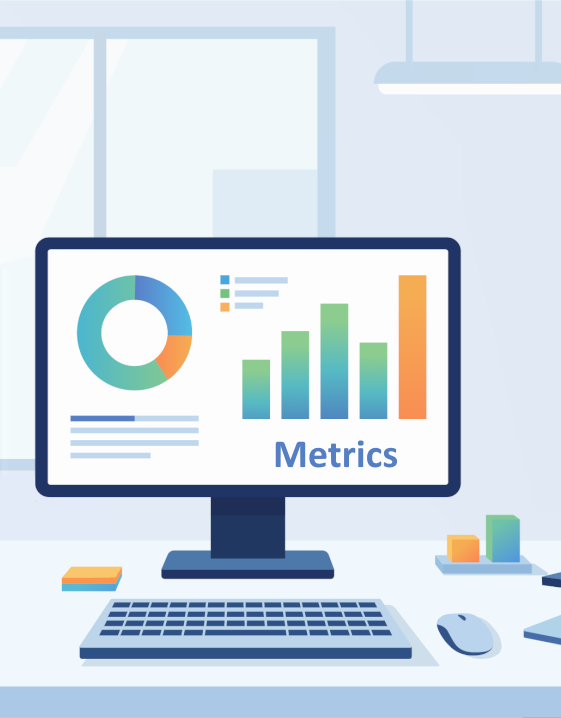
Metrics matter because they connect everyday activity to wider goals. Without that connection, it becomes difficult to tell whether effort is producing meaningful results or simply keeping people busy.
Business software often supports sales, finance, operations, customer service, or internal workflows. These systems can appear to function well on the surface while hiding inefficiencies underneath. A task may be completed, but take longer than it should. A feature may exist, but be rarely used. A process may technically work, but generate unnecessary rework.
Metrics provide visibility into these situations. They help decision-makers see patterns rather than isolated events. Over time, this leads to better prioritisation and fewer reactive decisions.
In practical terms, good metrics help a business to:
- 🧠 Make decisions based on evidence rather than opinion.
- 📈 Spot trends before they show up in financial results.
- 🔄 Identify problems early, while they are still manageable.
- 🧩 Create shared understanding of what success looks like.
Types of Metrics Every Business Should Know
Not all metrics serve the same purpose. Grouping them helps ensure that important perspectives are not missed.
Outcome Metrics (Lagging)
Outcome metrics show what has already happened. They are often reviewed monthly or quarterly and are usually financial or volume-based.
Common examples include revenue, customer retention, churn rate, or total transactions processed. These metrics are essential for understanding results and accountability. However, they are limited in what they can explain. A drop in revenue tells you something has gone wrong, but not where or why.
Outcome metrics are important, but they are reactive by nature.
Performance Metrics (Leading)
Performance metrics focus on behaviours and activities that influence future outcomes. They act as early indicators of whether things are likely to improve or decline.

Examples include feature usage trends, completion rates for key steps in a process, or the time taken to move from one stage to another. Because these metrics change quickly, they allow earlier intervention.
For example, if fewer users are completing a key action in your software, revenue may fall later. Performance metrics give you time to investigate and adjust before that happens.
Quality and Efficiency Metrics
Quality and efficiency metrics measure how reliably and smoothly systems and processes operate.
Examples include error rates, system uptime, rework levels, and cycle time from start to finish. Poor performance here often increases costs quietly, through wasted effort or reduced trust, rather than through obvious failures.
Tracking these metrics helps ensure that growth does not come at the expense of stability.
User and Adoption Metrics
User and adoption metrics show how people actually interact with software, rather than how it was intended to be used.

Examples include active users, frequency of use, and depth of feature engagement. These metrics often reveal gaps between design assumptions and real behaviour.
They are especially useful for understanding whether software is delivering value in practice.
Summary: Metric Types at a Glance
Before moving on, it helps to see these categories side by side.
| Metric Type | What It Tells You | Typical Examples |
|---|---|---|
| Outcome metrics | What has already happened | Revenue, retention |
| Performance metrics | What is likely to happen next | Feature usage trends |
| Quality and efficiency metrics | How well systems operate | Error rates, uptime |
| User and adoption metrics | How people use the software | Active users |
This balance prevents over-reliance on any single view of performance.
Choosing the Right Metrics for Your Business
Choosing metrics is far less about tools and technology than it is about clarity of purpose. Before looking at dashboards or metrics software, it is worth stepping back and asking a simpler question: what decision are we trying to make better?
Metrics only have value when they help guide action. If a number does not influence a decision, change behaviour, or prompt investigation, it is unlikely to be useful, no matter how impressive it looks.
For example, if the goal is faster delivery, measuring how many tasks are completed tells only part of the story. Time-based performance metrics, such as how long work takes to move from start to finish, provide a much clearer view of whether delivery is improving. Similarly, if customer retention is the goal, adoption and engagement metrics matter far more than raw sign-up numbers, which say little about long-term value.
Vanity Metrics

This is where vanity metrics often creep in.
Vanity metrics are numbers that look positive on the surface but offer little real insight. They tend to grow naturally over time and can create a false sense of progress. Examples include total downloads, cumulative user accounts, or total pages viewed since launch. These figures often rise even when underlying performance is declining.
The problem with vanity metrics is not that they are wrong, but that they are incomplete. A growing user total may hide the fact that most users stop engaging after the first visit. High page views may reflect confusion rather than success. When these metrics are taken at face value, they can mask issues that need attention and delay necessary changes.
More importantly, vanity metrics rarely lead to clear action. Knowing that a number is “big” does not tell you what to do next. Effective metrics should narrow choices, not leave them open.
When choosing metrics, common pitfalls include:
- 🎯 Measuring visible activity instead of meaningful progress.
- 🚫 Holding on to numbers that feel reassuring but drive no decisions.
- ⚖ Tracking too many metrics at once and losing focus.
- 🧮 Forgetting to revisit metrics as goals and priorities change.
In practice, a small set of well-chosen metrics, reviewed regularly, is far more effective than extensive reporting that no one fully trusts or understands.
This is where metrics software can be helpful. Good tools make it easier to adjust metrics over time, retire those that no longer serve a purpose, and keep measurement aligned with what the business actually needs to decide.
How to Set Metric Targets and Benchmarks
A metric is just a number on a screen unless you have context. Targets and benchmarks give you that context by answering one simple question: is this result good, bad, or just average?
The best place to start is with your own historical data. By comparing today’s performance with previous months or years, you can see if you are improving, staying flat, or falling behind. This is more reliable than using industry averages because it reflects how your specific business actually works.
Comparing different teams, offices, or products within your own company is also helpful. Because they all operate under the same roof, it is easier to see what is working well and share those “best practices” across the whole business.
However, you must set targets carefully. If a target is poorly chosen, people might focus only on “hitting the number” rather than doing a good job. This can lead to people taking shortcuts that damage quality or trust. Good targets should be ambitious but realistic, and you should review them regularly to make sure they still make sense.
Industry Benchmarks
Industry benchmarks are average scores or results collected from many different companies in the same line of work. They are usually gathered by trade groups or software providers to show what a “typical” result looks like for that industry.
These benchmarks are helpful for checking if your numbers look “normal” or sensible compared to everyone else. For example, it is like checking the average fuel consumption for your model of car; it helps you see if your vehicle is performing as expected or if something might be wrong.
However, you should use these figures as a rough guide rather than a fixed rule. Because benchmarks are broad averages, they often hide the details that make your business unique. Two companies in the same industry might have very different types of customers, prices, or ways of working.

If you compare yourself to a benchmark without thinking about these differences, you might set unrealistic goals or worry about a problem that isn’t actually there.
Visualising and Tracking Metrics
Metrics only create value if they can be understood easily.
Dashboards work well for regular monitoring, especially for performance metrics that benefit from frequent review. Reports are better suited to reflection and planning. Alerts are useful for exceptions, when something needs immediate attention.
Clarity matters more than visual complexity. Simple layouts, consistent definitions, and clear labelling reduce confusion and speed up interpretation.
Most metrics software platforms provide standard dashboards. These are effective when they are aligned with the decisions they are meant to support, rather than trying to display everything at once.

In logistics, delivery delays were once tracked only after customers complained. By introducing performance metrics around loading times and route deviations, issues were identified earlier and delays reduced.
In financial operations, focusing solely on transaction volume masked a growing error rate. Adding quality metrics highlighted where processes needed tightening, improving accuracy without slowing throughput.
In internal operations, task completion numbers looked healthy, but frustration was rising. User adoption metrics revealed that key tools were being avoided. Training and interface improvements followed, restoring efficiency.
In each case, better metrics led to better questions, which led to better outcomes.
When Custom Software Makes Metrics Better
Generic Off-the-Shelf Software
For many companies, Off-the-shelf tools cover many common needs and are often a sensible starting point. They work well when business processes follow standard patterns and when commonly accepted metrics are sufficient.
However, many organisations operate in ways that do not fit neatly into predefined models. Workflows evolve over time, systems are added incrementally, and key performance indicators become increasingly specific to how the business actually runs. In these cases, propriety software can start to feel restrictive.
Custom Software
Custom software lets you build metrics around how you actually work, instead of making your team change their habits to fit a tool. This means your data shows real performance, rather than results shaped by awkward workarounds.
Another advantage of custom solutions is integration. Metrics often rely on data spread across multiple systems, such as finance, operations, customer platforms, and internal tools. Off-the-shelf products may struggle to combine this data cleanly, leading to staff having to manually collate the data, introducing an increased likelihood of errors and inconsistent figures.
At BSPOKE Software we have found that, this situation commonly arises where metrics are fragmented, definitions differ between teams, or real-time operational insight is needed. Custom solutions help create clarity by enforcing consistent logic and presenting metrics in ways that match how decisions are made.
Bespoke software supports clear thinking about metrics instead of replacing it. When your measurement strategy is solid, custom systems make your data more accurate, timely, and relevant to your business.
Measuring What Matters: A Simple Framework
Up to this point, this article has explained what metrics are, the different types of metrics, and why some are more useful than others. The challenge many businesses face is not understanding metrics in theory, but knowing how to put all of this into practice without overcomplicating things.
This framework is not a technical model or a rigid process. It is a simple way of thinking about metrics so they stay connected to real decisions, rather than becoming numbers that are tracked out of habit. Each step builds on the one before it, and you can apply it whether you are using spreadsheets, off-the-shelf metrics software, or a custom-built system.
The key idea is that metrics should start with a decision and end with action. If a metric does not help you decide what to do next, it probably does not belong in your core set.
A practical framework helps keep metrics useful over time:

Define the Decision that Needs Improvement
Start with a real question you want to answer, such as where delays are coming from, why customers drop off, or which part of a process needs attention. This gives the metric a clear purpose.
Choose Metrics that Influence that Decision
Select numbers that directly affect or explain the decision. Avoid metrics that are interesting but disconnected from action.

Set Targets Using Meaningful Benchmarks
Decide what “good” looks like by comparing against past performance, internal standards, or realistic external benchmarks.
Visualise Metrics Clearly and Consistently
Present metrics in a way that makes trends and changes easy to spot, without unnecessary complexity.


Review and Refine as Goals Evolve
As priorities change, some metrics will become less useful. Reviewing them regularly keeps measurement aligned with reality.
Used consistently, this approach helps ensure that metrics remain practical rather than theoretical, and that they continue to support better decisions rather than simply filling reports.
Summary and Next Steps
Understanding what metrics is, allows businesses to move away from guesswork and towards evidence-led decisions. The right mix of outcome measures, performance metrics, quality indicators, and adoption data creates clarity and focus.
Metrics should simplify decisions, not complicate them. Supported by the right metrics software, and where appropriate, custom-built systems, they become a practical advantage rather than an administrative burden.
If you would like to explore how tailored software could work for your company, you can get in touch with us to talk it through.