- 🛠️ Understanding IT Outsourcing for UK Firms
- 📈 Strategic Benefits of IT Outsourcing
- ⚠️ Managing Outsourcing Risks & UK Compliance
- 🚀 5 Steps to Successful IT Outsourcing
IT outsourcing has become a serious strategic decision for many UK organisations, it is no longer just about handing over technical problems to someone else. It is about structure, resilience, predictability and long-term capability. When businesses explore IT outsourcing, they are often trying to solve pressure points that have built up over time. Systems become more complex. Security expectations increase. Internal teams stretch thin. Costs fluctuate. At that point, conversations with IT outsource companies usually begin.
This guide explains what IT outsourcing really means, why organisations choose it, how to approach it properly, and where it fits within a broader strategy.
🛠️ Understanding IT Outsourcing for UK Firms
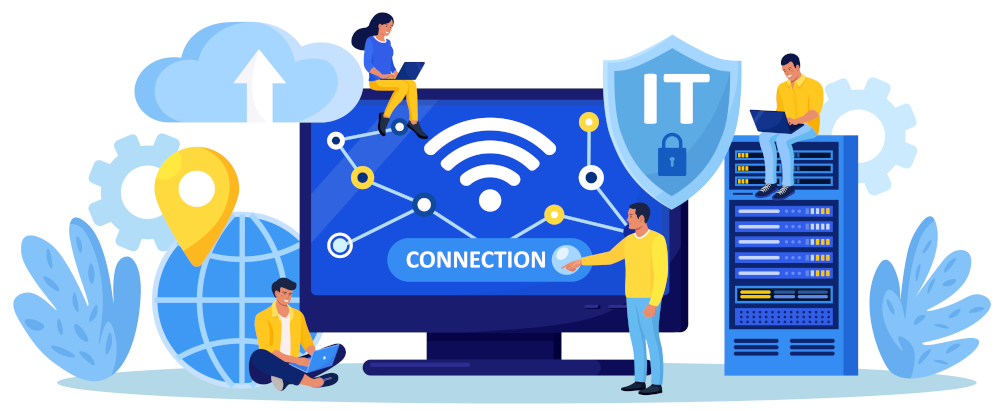
At its simplest, IT outsourcing means contracting external specialists to manage some or all of your technology functions. Instead of employing a full in-house team for every aspect of infrastructure, support, security and maintenance, you engage IT outsource companies to deliver defined services under an agreed contract.
Those services might include:
- 🛠 User support and helpdesk
- ☁ Cloud hosting and UK managed cloud service providers
- 🔐 Cyber security monitoring
- 💾 Backup and disaster recovery
- 📡 Network management
- 🖥️ IT Hardware
IT outsourcing does not always mean giving everything away. Many organisations retain strategic control while outsourcing operational delivery. Others take a hybrid approach, keeping internal oversight while appointing IT outsource companies for specialist functions.
The key point is this: IT outsourcing is structured. It operates under service agreements, performance expectations and measurable standards.
📈 Strategic Benefits of IT Outsourcing
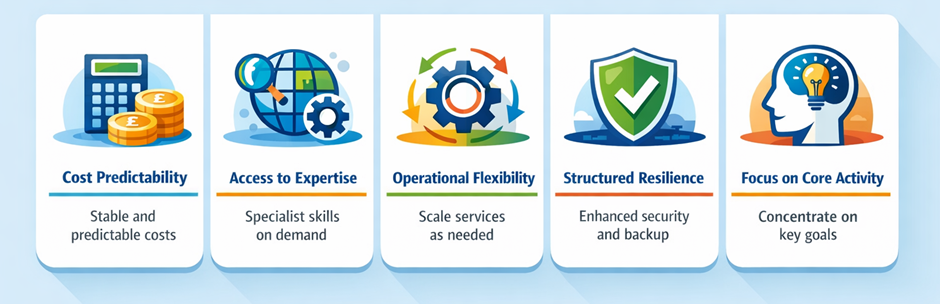
Through IT outsourcing, routine infrastructure management and technical troubleshooting can be handled externally. Leadership teams regain time to concentrate on growth, customer relationships and operational improvement. This shift in focus can gradually strengthen overall performance.
There are many reasons why organisations decide to work with IT outsource companies. While each business has its own pressures and priorities, the motivations tend to follow recognisable patterns. These decisions are rarely impulsive. They usually come after operational strain, growth, regulatory change or repeated technical challenges that are becoming difficult to manage internally.
💳 Achieving Cost Predictability & Financial Control
Running an internal IT function involves more than paying salaries. There are pension contributions, recruitment costs, training, equipment replacement cycles, licensing renewals and unexpected repair bills. These costs often fluctuate and can be difficult to forecast accurately. With IT outsourcing, pricing is typically structured around agreed service packages or monthly support agreements. This gives businesses greater visibility over expenditure and reduces the likelihood of sudden capital outlay.

For example, a growing construction firm operating across multiple sites may need secure remote access, device management and shared document systems. Recruiting a full in-house team capable of supporting every site could be expensive and underutilised during quieter periods.
By working with IT outsource companies, the firm moves to stable monthly costs while avoiding major upfront investment in infrastructure. Greater cost clarity supports more confident financial planning.
🌍 Accessing Specialist UK Technical Expertise
Technology requirements are becoming more specialised. Cyber security frameworks evolve. Cloud environments require specific configuration knowledge. Compliance rules change regularly.

A mid-sized financial advisory firm, for instance, may require expertise in secure data storage, encrypted communication and regulatory reporting systems. Employing permanent specialists across all of these areas may not be practical.
IT outsource companies bring together teams with varied technical backgrounds. When regulations shift or new systems are introduced, specialist knowledge is already available.
⚖️ Scaling with Greater Operational Flexibility
Business activity rarely stays constant. Hospitality groups experience seasonal peaks. Retail operations scale during busy trading periods. Manufacturing firms expand production when new contracts are secured.

With IT outsourcing, services can be adjusted more easily to reflect changing demand. A hotel group opening a new location can rapidly provision user accounts, devices and connectivity without recruiting additional internal staff. If trading levels reduce, support levels can be reviewed accordingly.
This adaptability helps organisations respond to opportunity without overcommitting resources long term.
🛡️ Building Structured Resilience & Continuity
System failure, cyber incidents or infrastructure disruption can have serious operational consequences. Local councils, for example, manage essential public services that rely on continuous system availability.

Established providers often operate formal resilience frameworks, combining monitoring, recovery planning and documented operational controls that smaller teams may struggle to maintain independently.
Rather than reacting to problems as they arise, outsourced providers often monitor systems proactively, identifying issues before they escalate.
🎯 Freeing Internal Teams for Core Activities
Every organisation has a primary purpose. For a manufacturing business, it is production quality and supply chain reliability. For a transport operator, it is efficient service delivery. Time spent resolving technical faults diverts attention from these core responsibilities.

Through IT outsourcing, routine infrastructure management and technical troubleshooting can be handled externally. Leadership teams regain time to concentrate on growth, customer relationships and operational improvement.
This shift in focus can gradually strengthen overall performance.
⚠️ Managing Outsourcing Risks & UK Compliance
While the reasons for IT outsourcing are clear, it is equally important to understand the potential challenges. Outsourcing can deliver real value, but only if it is approached with awareness and proper planning. Every decision to work with IT outsource companies should be balanced with a clear understanding of possible risks.

⛔ Loss of Direct Control
When you outsource IT functions, you are no longer managing those activities directly day to day. Decisions about system updates, support prioritisation and maintenance schedules may sit with your provider rather than your internal team.
If expectations are not clearly defined, this can create frustration. Response times may not match what you assumed. Small misunderstandings can grow into larger issues. Regular reporting, agreed service levels and open communication help reduce this risk significantly.
🧩 Communication Barriers
Even when working with UK-based IT outsource companies, communication gaps can occur. Technical language can be confusing. Assumptions may be made on both sides.
If outsourcing involves overseas providers, time differences and working hours can also affect responsiveness. It becomes essential to establish clear points of contact, escalation routes and structured reporting from the outset.
Strong communication processes are often the difference between a smooth partnership and a strained one.
🔐 Data Security and Compliance Risks
Granting a third party access to your systems introduces additional risk. Sensitive business information, customer data and financial records must be handled properly.
You must ensure that any IT outsource companies you work with, follow UK data protection standards, including GDPR compliance where relevant. Contracts should clearly define responsibilities, encryption standards, access controls and breach notification procedures. Security cannot be assumed. It must be verified and documented.
⚠️ Dependency on a Provider
Relying heavily on a single outsourcing partner can create dependency. If that provider changes pricing, alters service terms or experiences operational difficulties, your business may feel exposed.
This is why exit clauses and transition planning are important. You should always understand how services would transfer if needed. Sensible outsourcing arrangements build resilience rather than dependency.
💷 Hidden Costs
Not all outsourcing agreements are as straightforward as they first appear. Additional charges may apply for work outside scope, emergency call-outs or system upgrades.
If contracts are vague, costs can escalate unexpectedly. Careful review of pricing structures and clear documentation of what is included protects both parties. Transparency should never be optional.
When IT Outsourcing May Not Be Suitable
IT outsourcing is not automatically suitable for every organisation.
Some businesses operate in tightly regulated environments where direct internal control is mandatory. Others have already built strong in-house capability and prefer maintaining direct technical leadership.
If requirements are very limited or short term, a formal outsourcing contract may introduce unnecessary complexity.
The important consideration is alignment. IT outsourcing should support long-term direction. If it feels like a distraction or creates rigidity, alternatives may be worth exploring.
🚀 5 Steps to Successful IT Outsourcing
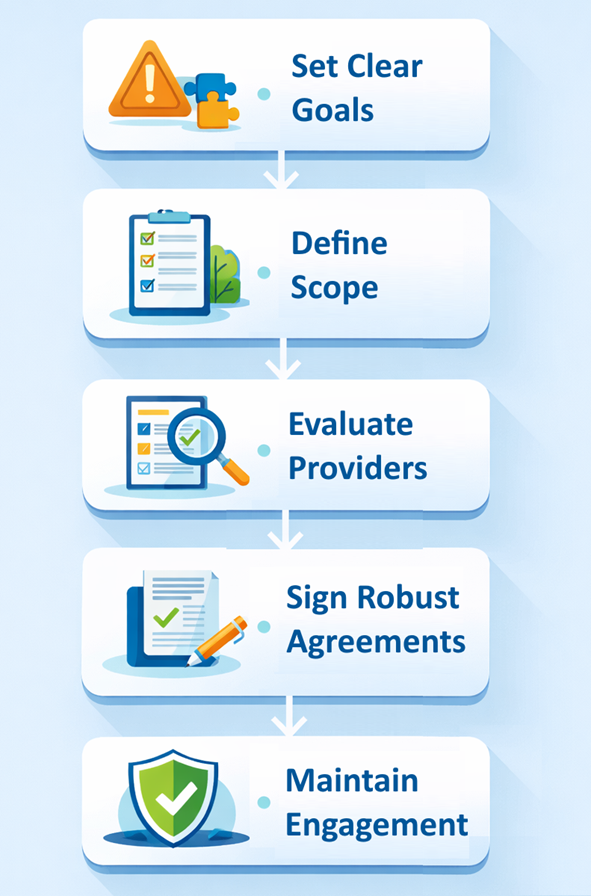
Once you have considered both the advantages and the potential risks of IT outsourcing, the next step is structured planning.
Successful outsourcing is rarely accidental. It is designed carefully, with clear commercial thinking and operational planning behind it. The following framework helps you move from consideration to confident decision-making.
Step 1. Set Clear Goals
You need measurable outcomes. For each service you outsource, define:

- How success will be measured
- Expected response times
- Quality standards
- Reporting requirements
This ensures you and the IT outsource company are aligned.
Step 2. Define Scope
Don’t outsource IT blindly. List the tasks, workflows, systems and services you want help with. Some common examples include:
- Helpdesk support
- Network and server management
- Security monitoring and incident response
- Cloud infrastructure hosting
- Backup and disaster recovery
Clarity here helps you compare offers and set expectations.

Step 3. Evaluate Providers
Not all outsourcing companies are equal. When you evaluate providers:

- Ask for references and case studies.
- Review qualifications and certifications (especially for security).
- Check how they handle data protection and compliance.
- Understand their support hours and escalation processes.
A good provider will be transparent and patient in explaining these things.
Step 4. Sign Robust Agreements
Good contracts protect both parties. They should include:
- Service levels and expectations
- Pricing structure
- Escalation paths
- Data handling and security obligations
- Exit and transition plans
This reduces surprises and gives you peace of mind.

Step 5. Maintain Engagement
Outsourcing doesn’t mean “set and forget”. You should ensure you have:

- Regular check-ins,
- Performance reviews and updates
- Means to monitor agreed standards
- A way to provide feedback
Participation in the above keeps the relationship productive.
Common Questions Regarding IT Outsourcing
💡 Yes, outsourcing allows smaller firms to access high-level expertise and enterprise-grade security without the overhead of a full-time in-house team.
💡 When you outsource, your provider becomes a data processor. Your IT outsource partner should follow strict UK data protection standards and ensure all outsourced functions meet rigorous compliance requirements to protect your business and customer data.
💡 Most UK business owners outsource to reclaim time and reduce operational headaches. By handing over routine maintenance and infrastructure management to a specialist partner, leadership teams can focus entirely on strategic growth and core business activities.
Governance and SLA Essentials in IT Outsourcing
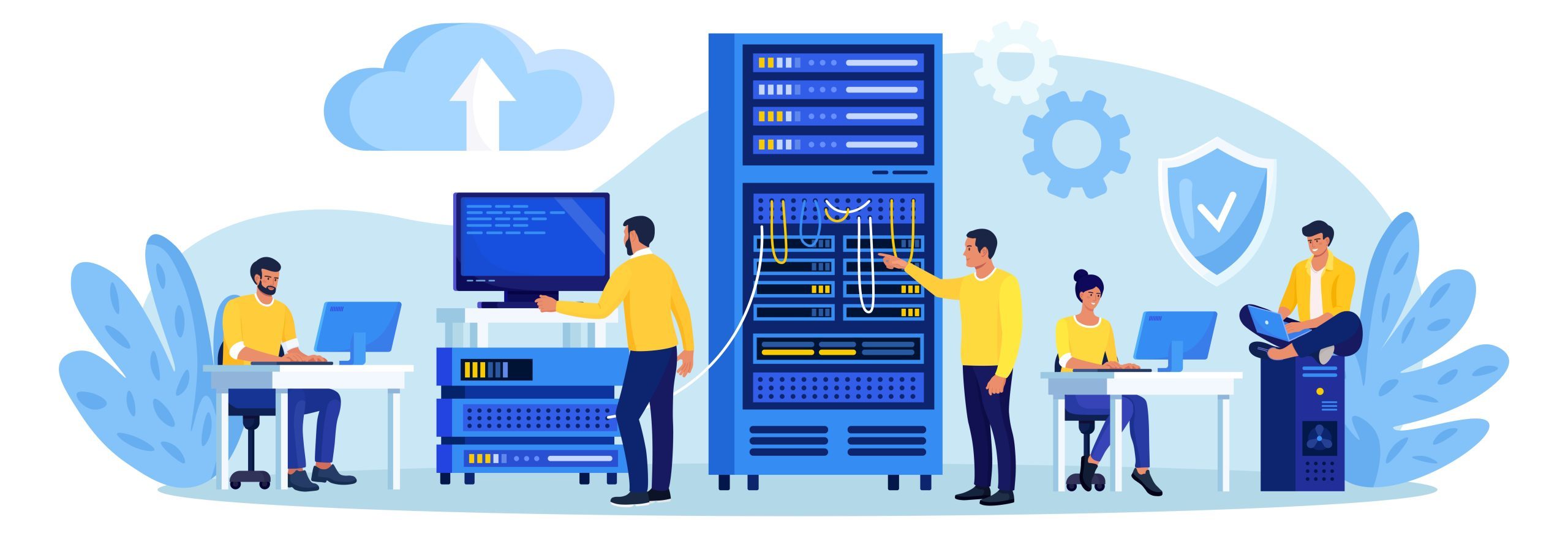
Once discussions with IT outsource companies progress, governance becomes critical.
A strong outsourcing arrangement is built on clarity rather than assumptions.
📌Service Level Agreements
These define measurable standards. Response times. Resolution times. Uptime percentages.
📌Performance Reporting
Regular reports provide visibility. Monthly or quarterly review meetings maintain alignment.
📌Change Control
Scope inevitably evolves. A formal process for approving changes protects both parties.
📌Escalation Routes
Defined escalation paths ensure serious issues receive appropriate attention quickly.
📌Exit Planning
Every agreement should contain structured exit terms. This protects continuity if circumstances change.
A Note on Custom Software
Most of this guide focuses on infrastructure and operational IT outsourcing. However, there is a related consideration when organisations commission bespoke systems.
When a company invests in custom software, hosting, maintenance and security oversight must be addressed.

At BSPOKE Software, we provide hosting and support for the bespoke systems we develop for clients. That support focuses on maintaining performance, applying updates and ensuring reliability within the scope of the software itself or within a larger scope when accompanying a digital transformation.
If you think bespoke software could be of benefit to your business, fill in our contact form and we will get back to you shortly.
Common Myths About IT Outsourcing
While a previous section covered practical operational risks, it is also worth addressing the perceptions that often discourage businesses from exploring outsourcing at all.
IT outsourcing has developed a mixed reputation over the years. Some concerns are based on genuine historical problems. Others are rooted in outdated assumptions about how outsourcing works today.
Modern IT outsource companies operate within far more structured governance frameworks than in the past. Service levels are documented clearly. Data protection standards are tightly regulated. Performance is measured formally. Yet despite these developments, hesitation often remains.
Understanding these misconceptions allows businesses to assess IT outsourcing based on current realities rather than second-hand stories or isolated experiences.
Common Myths with Clear Perspectives
| ❌ Myth: Outsourcing Means Losing Strategic Oversight |
| ✔️ Reality: Strategic direction should always remain with the business. Outsourcing operational delivery does not remove leadership control. With defined reporting structures, service level agreements and scheduled reviews, organisations retain visibility of performance and decision-making authority. |
| ❌ Myth: Outsourcing Is a One-Way Commitment |
| ✔️ Reality: Modern contracts include review periods, renewal structures and exit clauses. Outsourcing arrangements are commercial agreements, not permanent transfers of responsibility. When structured correctly, they allow for adaptation over time rather than locking a business into inflexible arrangements. |
| ❌ Myth: All IT Outsource Companies Operate in the Same Way |
| ✔️ Reality: The market is diverse. Some providers focus on enterprise infrastructure. Others specialise in cloud environments, compliance-heavy sectors or managed support for smaller organisations. Service models, response times and pricing structures vary significantly. Careful evaluation ensures alignment with your specific needs. |
| ❌ Myth: Outsourcing Solves Every Technical Problem Automatically |
| ✔️ Reality: Outsourcing improves structure and access to expertise, but it does not remove the need for internal clarity. Businesses must still define priorities, maintain communication and review performance regularly. Outsourcing works best as a partnership rather than a replacement for engagement. |
Final Thoughts
IT outsourcing is a strategic choice, not just a cost-saving decision. Done well, it empowers businesses to:
- Access expertise without huge internal investment
- Reduce operational distraction and improve organisational efficiency
- Ensure better reliability and security of systems
It’s not without risk, but with careful planning, smart provider selection and clear goals, outsourcing can be a major advantage. If your business is considering IT outsourcing, take your time, ask questions and choose partners who make technology work for you.