How to Build a Digital Roadmap That Actually Gets Used
What is a digital roadmap really for and why do so many end up ignored six months later?
The honest answer is that a digital roadmap only works when it helps people make better decisions week after week, not when it sits in a desk draw gathering dust.
A digital roadmap is not just a plan. It is closer to a working digital playbook, something that guides choices, priorities, and trade-offs in a period of business growth and optimisation. When done well, digital planning becomes easier, calmer, and far less reactive. When done badly, it becomes another document no one trusts.
This guide focuses on building a digital roadmap that stays useful, connects to everyday work, and supports change without overwhelming the organisation.
What a Digital Roadmap IS, and What it is NOT
A digital roadmap is a living guide that shows how digital changes will happen over time, why the changes matter and in what logical order tasks should happen.
What it is NOT

- Not a wish list: It isn’t just a list of “nice things to have.” It is a realistic plan for what you actually intend to do.
- Not carved in stone: It is flexible. If your business needs change next month, the roadmap should be adjusted to match.
- Not a technical diagram: It isn’t a complicated drawing showing how wires or servers connect. It is a high-level plan meant for everyone to understand, not just IT experts.
Think of your digital roadmap as part of a wider digital transformation playbook. The roadmap answers “what happens next and in what order”, while the digital playbook explains “how we usually make decisions around digital change”.
Good planning connects today’s problems (like a slow computer system) to tomorrow’s outcomes (like serving customers faster). It gives everyone in the company confidence because they can see there is a clear path forward, even if the specific details change along the way.
Why a Digital Roadmap Fails Without a Playbook Mindset
Many digital roadmaps fail because they are created once and then treated as finished. The business moves on, but the roadmap does not. A digital roadmap only works when it sits inside a wider digital playbook. This playbook does not need to be a big document or full of jargon. It just needs to guide everyday decisions.
For example, companies might answer these questions in different ways:
How do we Decide What Matters Most Right Now?
- We focus first on work that removes delays for customers.
Example: A private healthcare clinic has long waiting times for appointment confirmations. Patients become frustrated and choose other providers. The priority is improving booking and confirmation processes to reduce delays, thus provide better customer experience. - We prioritise anything that reduces manual effort for frontline teams.
Example: A facilities management company relies on staff to log jobs by phone and email. Engineers receive incomplete information, leading to repeat visits. Reducing manual job entry becomes a priority. - We choose initiatives that support this year’s main business targets.
Example: A renewable energy firm has a target to win more commercial contracts. Digital work that improves bid preparation and cost modelling is prioritised over internal reporting upgrades.
What do we Need to do to Avoid Starting too Many Things at Once?
- We limit the number of active projects per quarter.
Example: A university IT team supports multiple departments. By limiting active digital projects each term, staff can deliver improvements properly instead of spreading effort too thinly. - We only start new work when something else finishes.
Example: A hotel group pauses plans for a new guest app until its property management system upgrade is fully completed and stable. - We require a clear business owner before anything is added.
Example: A retail bank refuses to start a new analytics project until a senior leader agrees to own the outcomes and decisions.
How do we Adjust Plans when Reality Changes?
- We review priorities every quarter and adjust calmly.
Example: A food manufacturer faces unexpected rising ingredient costs. At the quarterly review, digital pricing work is moved ahead of marketing automation. - We pause lower-value work when urgent issues appear.
Example: A logistics company pauses a dashboard redesign when a sudden spike in delivery errors requires immediate system fixes. - We change timelines without blame when assumptions prove wrong.
Example: A charity planning a new donor platform realises data migration is more complex than expected. Timelines are adjusted without blaming the project team.
Without this mindset, digital planning becomes reactive. New ideas jump the queue, old priorities never quite finish, and confidence in the roadmap slowly fades. This is often where organisations quietly lose momentum.
Starting your Digital Roadmap with Real Business Problems
Before defining initiatives or timelines, a digital roadmap should start with a clear understanding of the real problems the business is trying to solve. These are everyday operational or commercial issues, not technology complaints.
Typical examples include work taking too long because information is spread across multiple systems, teams duplicating effort because tools do not connect, decisions being delayed because data cannot be trusted, or customers waiting longer than necessary due to poor visibility.
A strong digital roadmap links every initiative back to a specific business problem. If an item cannot be traced to a clear issue, it should not appear on the roadmap yet. This keeps digital planning practical, focused, and grounded in real value rather than assumptions about technology.
Examples Linked to Real Problems
The examples below show how common business issues can be translated into clear, understandable roadmap items without technical language.

Manufacturing Company
- Problem 1: Production delays caused by paper-based job tracking.
- Roadmap item: Introduce a simple digital job tracking system on the factory floor.
- Problem 2: High scrap rates due to inconsistent quality checks.
- Roadmap item: Standardise digital quality checklists across all lines.

Transportation Business
- Problem 1: Late deliveries because route planning is manual.
- Roadmap item: Implement basic route optimisation software.
- Problem 2: Customer complaints due to lack of delivery updates.
- Roadmap item: Add automated customer tracking notifications.

Construction Firm
- Problem 1: Site teams using outdated drawings.
- Roadmap item: Central digital drawing management for all projects.
- Problem 2: Cost overruns due to slow reporting from sites.
- Roadmap item: Mobile cost reporting linked to head office systems.
Structuring a Digital Roadmap So People can Easily Follow It
A useful digital roadmap should be easy to read and easy to explain. Many organisations over-engineer their roadmaps by trying to include every possible initiative. The result is often something that looks detailed but is difficult to understand or communicate.
A simple structure usually works best:
- Now – What the organisation is actively improving.
- Next – What is planned once current work stabilises.
- Later – What is being explored but not yet committed.
This approach supports digital planning without pretending the future is certain. It also allows the roadmap to adapt as priorities change. Importantly, this structure works equally well for small process improvements and larger system changes, including custom software initiatives.
A Simple Example Digital Roadmap View
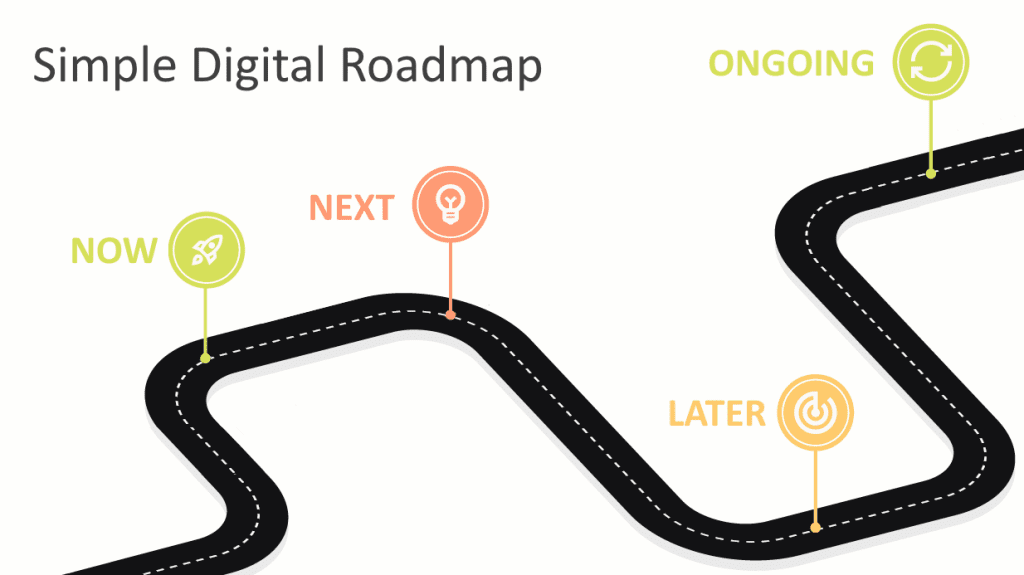
The graphic above illustrates a simplified version of the way many organisations visualise a digital roadmap. The table below expands on this and gives examples of focus and outcomes.
| Timeframe | Focus Area | Example Outcome |
|---|---|---|
| Now | Operational efficiency | Fewer manual handovers |
| Next | Data visibility | Faster reporting cycles |
| Later | Platform improvement | Easier future integrations |
| Ongoing | Governance | Fewer ad-hoc requests |
Detailed Digital Roadmap for a Fictional Accounting Firm
Below is a more detailed and industry-specific example for a mid-sized accounting firm serving small and medium businesses.

Now
- Automate client onboarding to reduce setup time and errors.
- Improve document management to ensure staff always use the latest files.
- Reduce manual data entry between bookkeeping and tax systems.

Next
- Introduce real-time dashboards for partner-level financial visibility.
- Improve workflow tracking to balance workloads across teams.
- Add secure client portals for document exchange and approvals.

Later
- Explore AI-assisted transaction categorisation for bookkeeping.
- Review practice management platform for long-term scalability.
- Investigate predictive cashflow tools for advisory services.

Ongoing
- Strengthen data governance and access controls.
- Regular review of regulatory and compliance requirements.
- Clear intake process for new digital requests.
This roadmap reflects the realities of an accounting firm, including compliance pressure, client service expectations and the need for accuracy.
Digital Roadmap Ownership and Governance
Every digital roadmap needs a clear owner. This should be a named person or a small, well-defined group, not a committee or shared inbox. Ownership is about care and consistency, not control.
In practice, ownership means regularly keeping the roadmap up to date, questioning new requests that do not align with agreed priorities, removing work that has been completed, and making sure any changes can be clearly linked back to business goals. It also means acting as a bridge between leadership, delivery teams and the wider business.
This quiet governance is a critical part of a digital transformation playbook. Without it, even a well-designed roadmap slowly fills up with exceptions, side projects and half-finished work until it no longer reflects reality.
Using a Digital Roadmap to Make Better Trade-Offs
One of the most important jobs of a digital roadmap is helping the organisation make trade-offs.
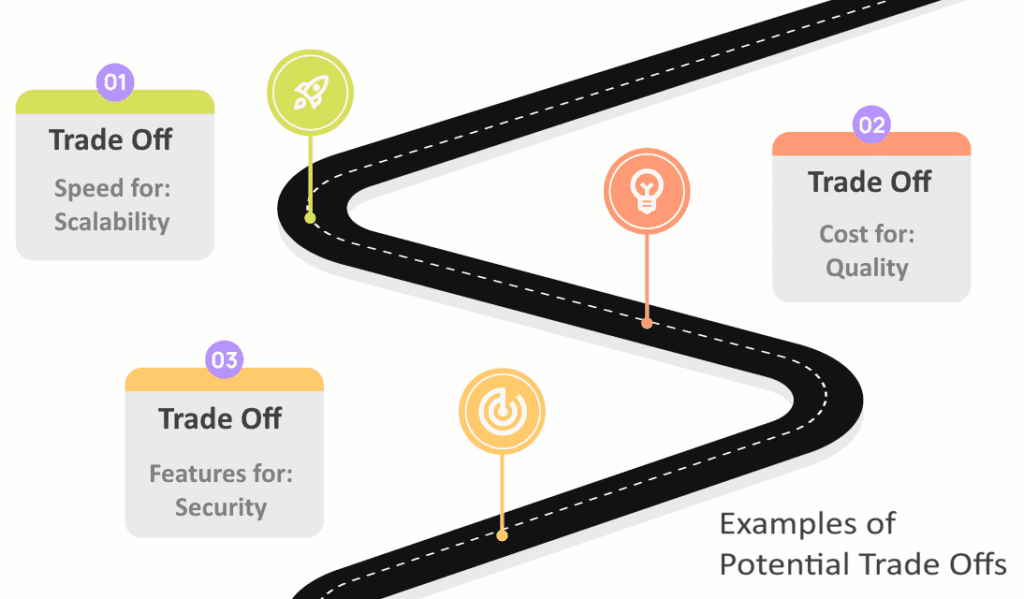
In the context of a digital roadmap, a trade-off is a deliberate, strategic decision to sacrifice one desirable benefit to gain another. Because resources are finite, a digital roadmap cannot include everything, therefore trade-offs are the necessary compromises made to align technology initiatives with business goals. New ideas will always appear, often labelled as urgent. The roadmap creates a shared reference point so these ideas can be assessed fairly.
This is where the roadmap and playbook work together. The playbook sets the rules, such as how priorities are assessed, what qualifies as urgent, and how much work can run at the same time. The roadmap shows the current commitments and the impact of change.
When something new is genuinely urgent, the roadmap helps everyone see what will need to move, pause or stop. Decisions feel less personal because they are based on agreed principles rather than opinion or influence. Over time, this reduces tension and makes digital planning feel fair and predictable.
Keeping the Digital Roadmap Alive
A digital roadmap should be reviewed regularly, but not too often as this can lead to a loss of strategic focus, confusion and information overload. Quarterly reviews usually strike the right balance. They give enough time for progress to be visible while still allowing the business to adjust course.
These reviews should include the roadmap owner, a senior business sponsor, representatives from delivery teams, and key operational stakeholders who feel the impact of change. This ensures decisions are informed by both strategy and reality.
During each review, completed items should be removed to keep the roadmap honest. Priorities should be rechecked against current business pressures, not last quarter’s assumptions. Timelines can be adjusted without blame, and ownership should be confirmed to make sure accountability is still clear.

Handled well, these reviews turn the roadmap into a living tool rather than a static document.
How a Digital Roadmap Supports Long-Term Change
Over time, a consistent digital roadmap begins to shape how the organisation thinks and behaves. People start asking clearer questions about why work is being done. They understand the value of sequencing and expect transparency around priorities.
This is where the roadmap quietly feeds into a wider digital transformation playbook. Not as a formal document, but as a shared way of working. Decisions become calmer, trade-offs become easier, and digital planning stops feeling hard. That is when real, lasting change starts to take hold.
Where Custom Software Fits into a Digital Roadmap
Custom software should only earn a spot on your digital roadmap when it clearly supports a business goal. While off-the-shelf tools or simple process changes are sometimes enough, they often fall short for niche businesses with unique requirements. At BSPOKE Software, many of our clients come to us after generic SaaS products have failed to deliver. In these cases, a tailored system isn’t just an option; it’s the missing piece of the puzzle.
When adding custom software to your roadmap, keep it simple. Focus on what will actually improve, like saving time or boosting capacity, rather than getting bogged down in how it’s built.
Building a Practical Foundation
You don’t need to be a technical wizard to build a roadmap, but it helps to have a fresh pair of eyes. We find the most effective roadmaps emerge when we sit down to design a system together. By aligning your business goals with practical delivery, we ensure your strategy is grounded in what is actually achievable, cutting through the fluff to focus on the tools you truly need. If your current plan feels a bit cluttered, it is often because it hasn’t yet been pinned down to a concrete technical solution.
The Bottom Line
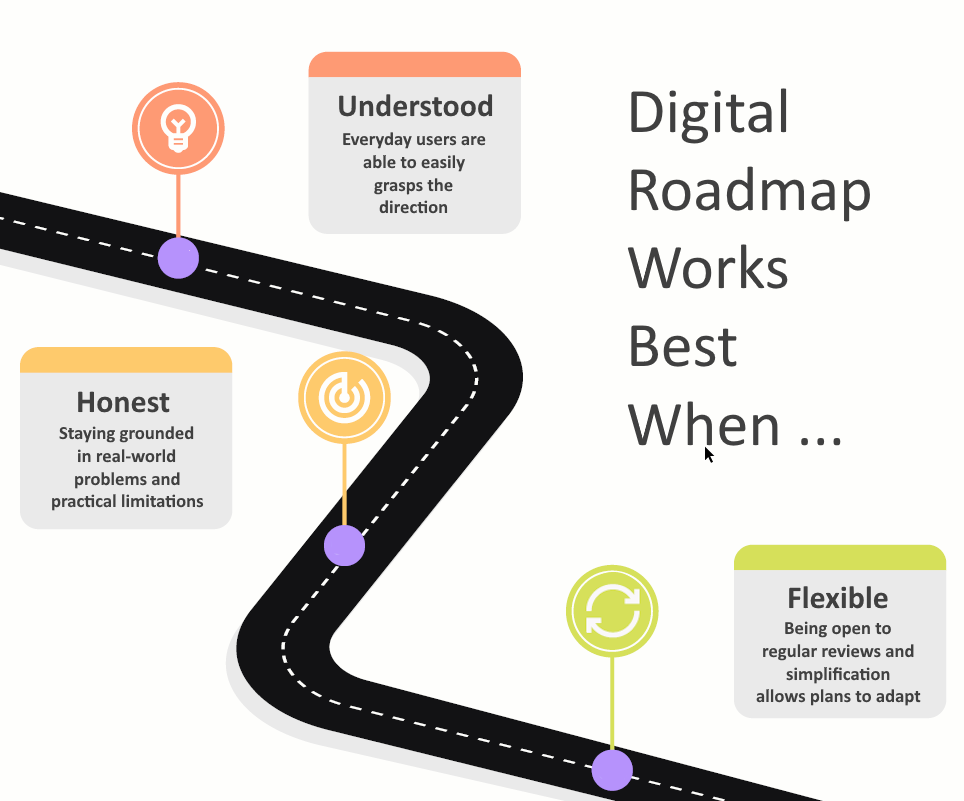
A digital roadmap works best when it is honest, flexible, and understood by the people using it every day.
It should be a living part of your digital playbook, not just a box-ticking exercise.
Keep it grounded in real-world problems, review it often enough to stay relevant, and never be afraid to simplify. That is how a plan earns trust and, more importantly, keeps it.
When generic tools won’t cut it, BSPOKE Software can help you map out a clear path to a system designed specifically for your business. We specialise in turning these strategic requirements into reality through Custom Software Development, ensuring your digital journey has a solid, workable foundation from day one.
Ready to Move Beyond the Planning Stage?
If you are looking to start building a system that actually fits your business, get in touch with us today. A quick chat about your project requirements can provide clarity and can start the process towards a tailored software system, that embodies the unique features your business needs.