Introducing Agile Minimum Viable Product
When companies think about new technology, they often imagine a long project with endless planning and a final launch far in the future. That image is tied to older ways of working. This can be off-putting for many businesses, as it suggests huge costs, a mountain to climb, and long months of development before any value is seen. For many, that picture alone is enough to delay action. Today, the agile minimum viable product (MVP) provides a far more effective approach.
The agile development methodology forms the foundation of this approach, which is part of the wider software development life cycle (SDLC). Agile focuses on short, repeatable cycles, constant feedback, and flexibility. Unlike older methods, agile allows teams to adjust direction quickly if priorities change. It also makes sure working software is delivered regularly rather than waiting until the end. To build on this foundation, it helps to look at the key principles behind agile.
Summary of Agile Principles
Agile is based on a set of values and principles that prioritise collaboration, responding to change, and continuous improvement. Development teams break development work into small, achievable chunks called sprints, which usually last two to four weeks. Each sprint produces a working piece of software that users can test and use. This ensures that businesses always see progress and can make informed decisions at every stage. Agile also supports adaptability, so if business needs evolve, the project can evolve with them.
To understand agile in more depth, we have written a detailed guide: Agile Model: A Software Development Lifecycle.
In this post, we will show how the MVP approach works hand in hand with agile, why it is the most suited method for building software, and how it can help your company invest wisely in new technology. We will also explain how building a minimum viable product makes sense for businesses upgrading old systems or connecting new software to existing tools.
What is an Agile Minimum Viable Product?
An agile minimum viable product is the simplest version of a new system that still brings value to the business. Developers include just enough features so users can use, test, and improve the product. Unlike a rough prototype, it is real software that users can work with, to complete their day-to-day tasks. Agile teams create it quickly, review how it performs, and then adapt the next release. This cycle repeats until the product grows into a complete solution.
Why MVP is More Than a Prototype
The MVP is not a throwaway test or sketch. It is a usable product that delivers immediate benefits. Agile ensures that each release is functional, tested, and secure. Think of it as a working foundation that can be expanded steadily.
Why MVP Works with Agile
Agile and the MVP naturally complement each other. Agile provides the rhythm, short, focused cycles with regular feedback, while the MVP offers the structure, starting small and expanding with each iteration.
Why Businesses Should Care About Agile Minimum Viable Product
For businesses, especially those considering custom software, the link between agile and the MVP is vital. Here is why:
Lower Risk
You do not bet everything on a large, untested system. By building a minimum viable product in agile, you release early, gather real feedback, and make adjustments before scaling up. This protects your business from costly surprises.
Faster Results
Agile encourages short development cycles. You see working software quickly, rather than waiting a year or more. This means you can start improving your business processes almost straight away.
Flexibility
Agile teams welcome change. If your market shifts or new priorities appear, the MVP can adapt without derailing the whole project. This flexibility is one of the biggest strengths of agile.
Cost Control
With feedback guiding development, you avoid spending money on features nobody wants. Each sprint has a clear focus, ensuring that teams use budgets efficiently.

This is the essence of building a minimum viable product in agile. You protect your resources while still making progress.
Agile Minimum Viable Product vs Traditional Launch
Traditional development, known as the waterfall model, involves planning everything upfront, building the full system, and then launching it at the end. It is rigid and difficult to change once it starts. If the requirements are not accurate, businesses can end up with software that no longer fits their needs. We cover this model in detail here: Waterfall Life Cycle Software Development Model.

Agile flips this model. Instead of waiting for the full product, teams build, test, and improve the MVP in quick cycles. This way, feedback shapes the system as it grows. For businesses, this means less waste, faster delivery, and greater confidence in the final outcome.
We have compared agile and waterfall directly in this post: Custom Software: Agile vs Waterfall Method. Below is a table that summarises the key differences:
| Traditional Waterfall Development | Agile MVP Approach |
|---|---|
| Long planning stages | Iterative planning, flexible scope |
| Full product built at once | MVP released early, then expanded |
| Costs mount before any value is seen | Value delivered regularly in cycles |
| Change is disruptive | Change is welcomed and integrated |
How Agile Fuels Feedback in MVP
In agile, feedback is central. Developers divide development into sprints: short, focused periods of work, usually two to four weeks long. At the end of each sprint, they demonstrate a working version of the product. This gives users the chance to review, test, and comment. Agile thrives on this cycle of showing, listening, and improving.
The MVP is an ideal fit for this process. Each release provides new insights. For example, staff might find a reporting tool too slow, or they might suggest an easier way to input data. Instead of waiting until the end, agile lets teams make these changes straight away.
Think of it as testing a recipe. You would not cook a four-course meal before tasting the first dish. Agile ensures teams test, adjust, and refine the MVP early in each cycle.
Agile Minimum Viable Product and Existing Systems
Not every company begins with a blank page. Many businesses already depend on existing systems, which can be outdated or supplied by third parties. The agile minimum viable product (MVP) offers a safe and measured way to move forward without disrupting day-to-day operations.
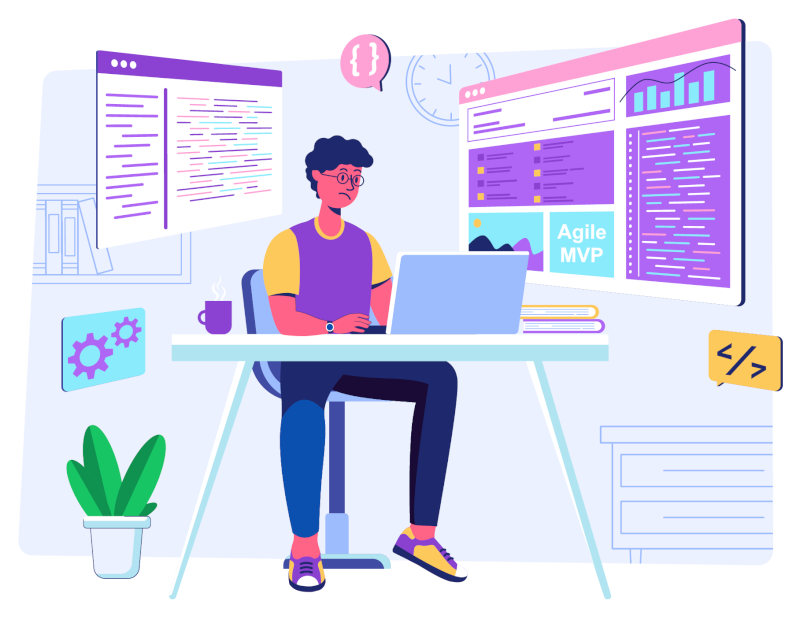
In this section, we explore how agile MVPs can be introduced alongside existing systems, using practical examples from different industries. We look at how companies that use third-party tools, can apply the same agile principles. Each example highlights a different industry sector and explores how an MVP can fill gaps, link systems together, and gradually build towards a fully tailored solution without interrupting everyday work.
A Practical Example 💼 Payroll Scenario:
Consider a firm using a legacy payroll tool. An agile MVP would first focus on the most basic and urgent function: time entry. Employees begin recording their hours in the new system. After this is stable and feedback has been gathered, the second cycle adds payroll calculations. Next, reporting is introduced. Finally, integration with HR completes the picture. During this staged transition, the old and new systems run side by side. The business never faces downtime or an abrupt change, which makes the shift smoother and less risky.

1️⃣ First Cycle of Development (Entering Time)
⬇️
2️⃣ Second Cycle of Development (Payroll Calculations Added)
⬇️
3️⃣ Third Cycle of Development (Reports Added)
⬇️
4️⃣ Fourth Cycle of Development (HR Integration is Completed)
Detailed Step-by-Step Breakdown
| Cycle 1 – Entering Time: Staff start logging their hours in a simple interface. | Teams gather feedback on ease of use. Data accuracy is checked against the old system. |
| Cycle 2 – Payroll Calculations: Automated wage calculations are added. | Errors are reduced by validating data directly. Finance staff begin testing side-by-side with the old tool. |
| Cycle 3 – Reporting: Reports for managers are introduced. | Compliance requirements are addressed. Feedback from managers guides the format of reports. |
| Cycle 4 – HR Integration: System connects with HR databases. | Leave management and employee record features go live. Legacy payroll tool is finally retired. |
This clear, step-by-step approach highlights how agile MVPs provide value early, prove reliability, and then expand until they fully replace older systems.
Working Alongside Third-Party Software
Some companies use third-party software, such as project management tools, accounting packages, and fleet tracking applications. These might lack specific features needed for day-to-day work, such as detailed cost tracking. An MVP can be developed to integrate with the third-party tool while adding the missing function. Later iterations may replace more of the tool until the company has a tailored system of its own.

Hospitality Example:
Hotels and restaurants often use third-party accounting packages to manage sales and expenses. However, these systems might not link directly with booking or point-of-sale data. An MVP could start by linking the accounting software with daily sales reports to automate revenue tracking. Later versions could add stock control, payroll summaries, and detailed profit analysis by location or service type.
Transport Example:
Transport and logistics companies rely on third-party fleet tracking systems to monitor vehicles. These tools may not provide full insight into fuel use or driver performance. A first MVP might connect with the tracking software to collect journey data and create simple cost-per-trip reports. Later updates could include driver performance dashboards, maintenance scheduling, and route optimisation tools.


Construction Example:
Companies in construction often depend on third-party tools for project management or supplier communication. These tools might not match how the business really works. Using agile, a tailored MVP could first connect with the existing third-party system to handle just one feature, such as site task tracking. Future cycles then expand into budgeting, subcontractor management, and document storage.
The Process of Building a Minimum Viable Product in Agile
Before You Start:
🧭Good planning makes all the difference:
- Set clear goals 🎯
- Decide priorities 🗂️
- Define what success looks like ✅
(For more help, see our guide on planning software projects.)

First Step – Identify the Main Pain Point
Focus on the biggest or most urgent problem. This is because, the MVP should fix a real issue, not a wish list of nice-to-have features.
Second Step – Define MVP Features
The goal is a working solution, not a complete product. So, keep it simple by only including what’s needed to solve the main problem.
Third Step – Build in Short Sprints
Working in short, focused time blocks (usually 2–4 weeks), enables the sprint to deliver a working part of the software that can be tested.
Fourth Step – Release and Gather Feedback
Each sprint ends with a working version for users to try. This allows user feedback to help guide what to improve in the next cycle.
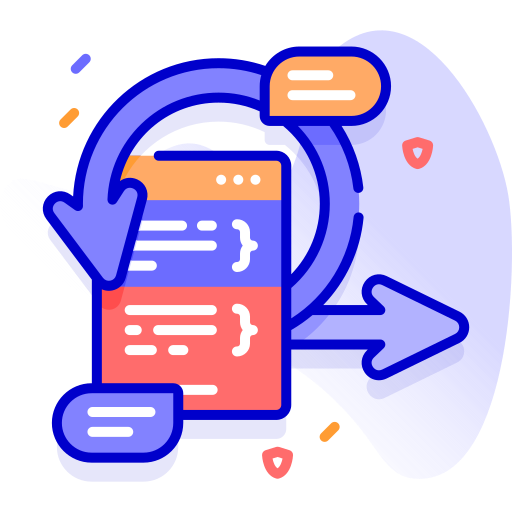
Fifth Step – Improve and Expand
Keep refining based on what you’ve learned and add new features gradually to turn the MVP into a full system.
Common Misunderstandings About Agile MVP
Despite its advantages, the agile MVP is often misunderstood. Here are some common myths:
Myth 1 – MVP is Just an Idea
Some believe MVP means a loose concept or unfinished idea. In truth, an agile MVP is a real, usable product that brings value from the very first release.
Myth 2 – MVP Means Poor Quality
Some think MVP means cheap or low standards. In fact, agile insists that each release is built to professional standards. Reliability and security are never compromised.
Myth 3 – MVP is Unfinished
Each MVP release is complete for its stage. Later versions add more, but what is delivered must be usable. Agile ensures the product evolves through steady, finished steps.
When businesses understand these points, they see that building a minimum viable product in agile is about clarity and focus, not corner cutting.
Final Thoughts
As we’ve seen, building a minimum viable product with agile keeps projects focused, flexible, and cost-efficient. It’s a proven way to move forward with confidence, reducing risk and ensuring progress from day one.
At BSPOKE Software, we help businesses transform the way they work through custom software development and digital transformation. Our team uses the agile MVP approach to deliver solutions that grow with you, from first concept to full rollout.
💡 Ready to take the next step?
Talk to BSPOKE Software today to explore how an agile MVP could help your business move faster, work smarter, and achieve more.