Service Level Agreement (SLA)
Before signing a long-term contract with any service provider, be it IT support, cleaning, delivery, or software development, it’s wise to have a service level agreement in place. Known as an SLA, this document defines what you can expect from the provider and what happens if things go wrong. It reduces risk, builds trust, and saves a lot of trouble later on.
At BSPOKE Software, we’ve worked with clients from many sectors and seen how a clear SLA creates a better working relationship. Even though we specialise in software, the same principles apply to almost any kind of business partnership. This guide explains SLA meaning, introduces the different types of agreements, and provides a service level agreement sample with explanations for each part.
Disclaimer – The information in this article is provided by BSPOKE Software for general guidance only. It does not constitute legal advice. While we specialise in software development and can share insight into SLA meaning and practical use, we are not legal professionals. Before signing or relying on any service level agreement sample, seek independent legal advice suited to your own business circumstances.
Understanding SLA Meaning: The Foundation of a Reliable Partnership
An SLA, short for service level agreement, is a formal understanding between a provider and a client. It explains what services will be given, the standard of performance expected, and the action that follows if those standards aren’t met.
Think of it as the set of rules for how two parties will work together. It stops assumptions and sets out exactly who does what and when.
You’ll find SLAs everywhere. A facilities company might guarantee that buildings are cleaned daily. A logistics firm might commit to delivering parcels within a certain time. An IT hardware supplier who also provides maintenance, could promise specific response times. In every case, the goal is the same: to create clear expectations and reduce uncertainty.
The SLA meaning doesn’t change between industries, it’s always about accountability and quality. What does change is what’s being measured.
For example, in a SLA for software, you might find details about system uptime, bug fixes, or update schedules. In a manufacturing SLA, you’d see service turnaround times or machinery maintenance frequency. Each version is shaped by the work it covers, but the core purpose remains identical: clarity and fairness.

Why Businesses Use SLAs
You already know an SLA defines what services will be delivered and how performance will be measured. But beyond definitions, businesses use SLAs because they turn expectations into clear, measurable commitments.
They promote transparency by setting exact standards rather than vague promises, reduce disputes through agreed procedures, and act as a mutual guarantee, each side knows what they owe and what they can expect.
Types of Service Level Agreements Across Businesses
Before reviewing a service level agreement sample, it helps to know the different structures used across industries. Some are written for single customers, others for groups or departments.
| Type of SLA | Description | Common Use |
|---|---|---|
| Customer-based SLA | One agreement tailored to a specific client covering all the services they receive. | Consultancy, bespoke solutions, or custom software projects. |
| Service-based SLA | A single document applied to every customer using the same service. | Internet service providers, telecoms, cloud hosting, and SaaS platforms. |
| Multi-level SLA | Combines company-wide standards with customer-specific or service-specific layers. | Large organisations with multiple departments or business units. |
| Operational-level SLA | Internal agreements between teams in the same organisation. | HR departments, facilities management, or internal IT support. |
While these models work across industries, a few sectors need extra detail.
For example:
- Maintenance services might include time limits for repairs or replacements.
- SaaS (Software as a Service) platforms often focus on uptime, backup, and data recovery.
- Professional services (accounting, legal, or consulting) may measure deliverables such as reports, deadlines, or accuracy levels.

Every industry shapes its SLAs around what matters most to its customers.
General vs Software-Specific SLAs
To see how these differences play out in practice, the table below compares a general service agreement with an SLA for software.
| Aspect | General Service SLA | Software or SaaS SLA |
|---|---|---|
| Focus of Service | Physical or operational delivery (e.g. maintenance, cleaning, logistics). | Digital performance, system uptime, and user support. |
| Main Performance Metrics | Response time to issues, frequency of visits, delivery accuracy. | Uptime percentage, response and resolution times, data recovery speed. |
| Typical Client Interaction | Face-to-face or on-site. | Remote or online. |
| Service Continuity | Replacement of staff or equipment. | Backup servers, disaster recovery plans. |
| Review Method | Physical inspections, completion reports. | Automated system logs, digital reports, user analytics. |
| Examples of Remedies | Free call-outs, refunds, extended maintenance. | Service credits, free support extensions, additional monitoring. |
Both kinds of agreement share the same intent: consistent quality and accountability. They just express it differently.
SLOs, SLIs and Why They Matter
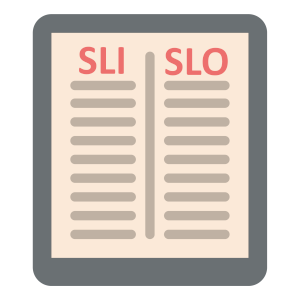
When you define a service level agreement sample, you’re setting broad terms. Yet behind every SLA sit two important ideas: SLIs (service level indicators) and SLOs (service level objectives).
An SLI is a measurable metric, something you can count or track. For example, the time it takes to respond to a customer request. An SLO, on the other hand, is the goal you set for that metric, such as “respond within four business hours.
In plain terms:
- SLIs are what you measure.
- SLOs are what you aim for.
- The SLA is the formal commitment based on those goals.
Including these in your software or facilities contracts ensures clarity and accountability. In software, an SLO might relate to uptime or bug resolution time; in logistics, it could be delivery accuracy. The principle is the same clear, measurable performance.
Service Level Agreement Sample and Explanation
The service level agreement sample below applies to most businesses. We’ve included notes explaining how it might differ in software or digital contexts.
SERVICE LEVEL AGREEMENT SAMPLE
1. Introduction
This Service Level Agreement (“SLA”) is made between [Provider Name] (“Provider”) and [Client Name] (“Client”). The purpose of this SLA is to outline the services provided, the standards expected, and the responsibilities of both parties.
2. Scope of Services
The Provider will deliver the services described in the main contract or statement of work. This could include cleaning, logistics, technical support, or maintenance. For custom software projects, the scope might describe development, testing, and long-term support.
3. Performance Metrics
Performance will be measured using agreed standards such as:
- Response Time: All client requests acknowledged within 4 business hours.
- Resolution Time: Urgent issues resolved within 24 hours, standard issues within 3–5 business days.
- Service Availability: Provider ensures 99.5% uptime or service delivery reliability, excluding planned maintenance. In non-digital services, “availability” might instead refer to staffing or delivery reliability rather than system uptime.
4. Responsibilities of Each Party
The Provider must deliver services professionally, provide documentation, and communicate updates. The Client must provide access, information, and approvals to allow services to continue smoothly. In software, this often means feedback on testing; in physical services, it might mean granting site access.
5. Reporting and Reviews
The Provider will issue performance reports and both parties will meet quarterly to review outcomes, identify improvements, and discuss new needs.
6. Support or Contact Availability
Standard contact hours: Monday to Friday, 9am to 5pm local time, excluding public holidays.
Out-of-hours or emergency support may be available by prior arrangement. In a software SLA this often relates to helpdesk access, while a facilities SLA might refer to out-of-hours call-outs.
7. Penalties and Remedies
If agreed service levels are not met, compensation may include service credits, refunds, or free remedial work.
8. Termination
Either party can terminate this SLA with 30 days’ written notice, provided all obligations are fulfilled.
9. Legal and Confidentiality
Both sides agree to protect confidential information and follow data protection laws relevant to their industry.
10. Signatures
Signed by authorised representatives of both the Provider and the Client.
Breaking Down the Service Level Agreement Sample
Every section of this service level agreement sample has a clear purpose.
Introduction
The introduction names the parties and states the purpose, avoiding any confusion about who the agreement applies to.
Scope
The scope defines what the service includes and, equally important, what it doesn’t. In software projects, that might list system development and future updates. In logistics, it could describe delivery routes or schedules.


Performance Metrics
The performance metrics section turns promises into measurable results. Without numbers, it’s impossible to monitor performance fairly.
Responsibilities
The responsibilities section protects both sides. Delays often happen when a client doesn’t provide access or feedback on time. Setting expectations here, keeps work flowing.

Reporting Reviews and Support
Reporting and reviews maintain communication, while support availability clarifies when and how to reach help.
Penalties
Penalties make the agreement meaningful. They encourage accountability without damaging the relationship. And the final three sections termination, legal, and signatures; ensure both sides can rely on the document if problems arise.

Escalation, Breaches and How to Handle Them
A service level agreement sample must also address what happens when things go wrong. A breach occurs when agreed standards aren’t met, perhaps a delayed response or an outage lasting longer than promised.
Good SLAs outline clear escalation steps:
- Who is informed first and how quickly.
- What corrective action follows.
- When senior management becomes involved.
This avoids confusion during stressful moments. In a software project, escalation might involve technical leads or project managers. In cleaning or logistics, it might escalate to area supervisors. The key is having a defined chain of action before problems occur.
Why SLAs Are Beneficial for Most Companies
As we’ve seen, SLAs work across every industry. They turn everyday arrangements into structured, reliable partnerships.
By defining targets clearly, they help suppliers perform better and give clients confidence in the results. This is especially important in software, where downtime can be costly, but the same logic applies to any ongoing service.
In short, an SLA brings stability and peace of mind.

Tips for Building a Strong SLA
Four key steps to a successful SLA:
- Be specific. Use clear time frames, measurable goals, and agreed definitions.
- Keep it realistic. Ambitious promises that can’t be met help no one.
- Review regularly. Services evolve, and so should your SLA.
- Make it mutual. The agreement should benefit both sides, not just one.
These simple principles work across every industry and help maintain good, long-term relationships.
Avoiding Common SLA Pitfalls
Some agreements fail because they’re too vague or forgotten over time. Using unclear phrases like “as soon as possible” leads to frustration. Always replace them with exact times or measurable goals.
Another pitfall is failing to review your SLA after major changes. For example, if your company begins operating seven days a week, your provider’s five-day support promise may no longer suit your needs.
And never assume one SLA fits all. A marketing agency’s performance standards won’t resemble those of a security company or a SaaS provider.
So before signing your service level agreement, ensure that all potential pitfalls have been covered.

Beyond the SLA: User Experience and the Rise of XLAs
Some organisations now look beyond pure performance numbers toward Experience Level Agreements (XLAs). These measure how users feel about the service. Instead of only tracking “tickets closed,” an XLA might assess “user satisfaction above 90%.
While not essential for every business, blending an SLA with elements of user experience can offer a fuller picture of success. For software systems, this could mean tracking client feedback or usability ratings as part of ongoing reviews.
Keeping Your SLA Relevant
A strong SLA isn’t a one-off document, it should evolve as your business changes. Review it at least once a year, or sooner if new systems or major updates appear.
In fast-moving fields like software and SaaS, quarterly reviews may be wiser to capture updates, integrations, or new security standards.
By treating the SLA as a living agreement, both sides stay aligned, protected, and ready to improve continuously.
In Summary
A service level agreement gives you a blueprint for accountability, communication, and trust. No matter what industry you are in, the structure of a good SLA stays the same.
For businesses planning a new digital project or bespoke software, make sure your agreement covers uptime, maintenance, and data protection. These details keep your operations running smoothly.
BSPOKE Software specialises in providing individual custom software systems and digital transformations, if you’re considering upgrading your technology, get in touch with our team today. Fill in our contact form and we will get back to you shortly.